
Nirma University Journal of Business and Management Studies


Aishwarya Mitra1 and Keshav Kant Prasad2
1Institute of Management, Nirma University, Ahmedabad, Gujarat, India
2Department of Business Administration, School of Business, Amrita Vishwa Vidyapeetham, Kochi, Kerala, India

This article is distributed under the terms of the Creative Commons Attribution-NonCommercial 4.0 License (https://creativecommons.org/licenses/by-nc/4.0/) which permits non-commercial use, reproduction and distribution of the work without further permission provided the original work is attributed as specified on the SAGE and Open Access page (https://us.sagepub.com/en-us/nam/open-access-at-sage).
To attain the ability of retirement readiness and the morale for eventual security in later years, acquiring financial literacy (FL) is intrinsic, which further leads to financial well-being (FWB). In this context, the present study aims to examine the impact of FL on employees’ FWB via the interaction role of retirement planning behaviour (RPB) in the Indian IT sector. A cross-sectional quantitative research design approach was adopted, where an analysis of 352 employees collected through self-administered questionnaires was done using PLS-SEM. The findings highlight significant and positive impacts of FL on employees’ FWB, with significant partial mediation of RPB in the FL-FWB association, suggesting that FL has a vital influence on improving the efficiency of retirement perception, thereby posing as an anchor in FWB. Considering the prior available research, very few studies have explored these intricate relationships, and thus, this research would serve as an essential guide for both organisations and policymakers.
Financial literacy, financial well-being, retirement planning behaviour, employees, structural equation modelling, empirical
Introduction
Planning ahead has always been an inextricable element of the diurnal nature of human beings ever since the evolution of the human race. Advanced and dynamic transitions in the phase of globalization and industrialization have put a thrust on the need to be financially prepared from the early stages of life, for which a sense of financial acumen to improve the general well-being (Lusardi & Mitchell, 2007) must be instilled in employees.
For this purpose, the competence of understanding financial concepts by an individual, anticipating their financial journey and acting in response requires them to attain the financial literacy (FL) skill (Taft et al., 2013). Ironically, despite the growing criticalities and complexities of the financial market owing to the instability in the global economy coupled with an increased variety of financial products, prior research has provided evidence that in developing and unaffluent economies, individuals lag behind in their grasping capacity of financial knowledge (Philippas & Avdoulas, 2020b); roughly one third of the world’s population comprehends basic financial concepts such as interest rates, inflation and risk diversification (Lusardi, 2019). There is a heightened need to address the vitality and criticality of FL for making wise financial decisions for financial well-being (FWB), which has been focused on in this research paper (Kaur et al., 2022; Lee et al., 2020; Limbu & Sato, 2019; Mitra & De, 2024).
The need for FL becomes all the more critical during the post-retirement phases of an individual, where preparing for changes in one’s lifestyle to achieve well-being needs to offset financial constraints (Taylor & Doverspike, 2003). In this context, the study proposes to discuss the critical mediating role of retirement planning behaviour (RPB). In recent decades, RPB has emerged as a concept that is no longer constricted to money motives; rather, it has been discovered as a means to attain FWB and security (Murari & Shukla, 2021). Rising awareness of the abrupt shift from financial aspirations for retirement to spiritual motives to fit into an employee’s life cycle has been apparent (Wellfren et al., 2022), making RPB a pivotal catalyst to cascade the effects of life-long accumulated financial understanding to achieve FWB.
To further understand the relationship between the attitudes, intention and behaviour of individuals’ post-retirement phases, that is, ‘Retirement Planning Behavior’, which impact their desire to achieve FWB, the theory of planned behaviour (TPB; Ajzen, 1991) and the future time perspective theory (Percy & Elizabeth, 2011) have been proposed. TPB states that an individual’s intention to engage in a particular behaviour is influenced by their positive or negative attitude towards the behaviour, subjective norms and perceived behavioural controls (She et al., 2022), which subsequently shapes the behavioural intention, thus reflecting the individual’s perception towards future planning behaviour (Kimiyagahlam et al., 2019).
Likewise, the future time perspective theory, which is a critical predictor and antecedent of future financial planning (Hershey et al., 2010; Kerry, 2018), emphasizes the cognitive ability to analyse both immediate and long-term implications of assigning work in the distant future (Andriessen et al., 2006), thus highlighting the effects of time on individuals’ future actions. Therefore, effective retirement planning requires an understanding of the behavioural perceptions and decision-making tendencies of employees that influence their efforts to optimize financial well-being. This perspective is well supported by the aforementioned theoretical frameworks.
Additionally, researchers have underlined that comprehending the finance philosophy would result in greater oversight in money management skills in both short and long terms (Boisclair et al., 2015; Lusardi, 2019). Advanced FL focuses on market products and services, and indirectly serves as an alternative asset for retirement portfolios (Niu & Zhou, 2018). People’s financial knowledge and decision-making abilities, commonly referred to as FL, have a vital influence on their psychological financial perception of the post-retirement life, improving the efficiency to customize a retirement plan and posing as an anchor in their FWB (Mitra & De, 2025).
Rationale of the Study
The study’s rationale can be attributed to rising stress among employees due to their financial constraints. Amidst any form of critical financial situation disrupting the economy and people’s lives and escalating the cost of living, researchers have found that 8 in 10 employees report worrying about their FWB to varying extents. Moreover, nearly 80% employees believe that stress around FWB negatively affects performance in the workplace, yet they are reluctant to discuss their financial concerns. Also, scholarly work remains scarce in this area to address this heightening issue of employees.
Evidence from countries such as Netherlands, China, Malaysia, Russia and the USA has highlighted the growing importance of FWB arising from FL and enhanced RPB in the context of employees (Agnew et al., 2013; Almenberg et al., 2011; Boisclair et al., 2015; Case & Klapper, 2011; Niu & Zhou, 2018; Van Rooij et al., 2011). However, a large disparity exists in confronting the increasing relevance and need of resolving the FWB problem in India despite the country having the greatest growth rate among the world’s dominant economies, particularly among the working human capital (Dutta, 2017). To the best of the researchers’ knowledge, Indian economy needs to be explored in this area.
Further, to address this significant gap, employees of the Indian IT sector have been chosen for the study. The reason for selecting the IT sector can be justified in that the stress level experienced in the IT sector is disproportionately higher than that experienced by people working in other businesses, with coping with and managing financial problems taking up a substantial portion of their time (Jha et al., 2024; Mandal & Pal, 2024; Subikshaa & Shoba Jasmin, 2018). Additionally, because of the working circumstances and pressure, most employees are not engaged in their finances (Neha et al., 2022). So specifically, the association between FL and FWB coupled with RPB should be exceptionally significant for this industry (Faezah et al., 2017; Mustafa et al., 2017; Vinmalar, 2018).
To address this existing gap, the study proposes to explore the intricate linkages between FL and FWB with the mediating effect of RPB, where FL could equip employees with the understanding and abilities essential to engage in adept retirement planning, thereby improving their FWB. Therefore, our study intends to address the following research questions:
RQ1: What is the effect of financial literacy levels on attaining employees’ financial well-being?
RQ2: What is the intervention/mediating effect of retirement planning behaviour on the financial literacy-financial well-being relationship?
The novel contribution of the study can be encapsulated as (a) exploring the financial aspect, that is, the FL concept, in the existing literature of FWB of employees, especially in the Indian IT sector; (b) elucidating the intricate financial antecedents of employees’ FWB with the illustration of the mediating portrayal of RPB in the FL-FWB relationship; and (c) testing the proposed hypothetical model empirically on account of dearth in prior literature on FWB in the Indian context.
Literature Review and Hypothesis Development
Financial Well-being
A sense of tranquillity, security and calmness from a financial perspective gives way to an individual’s FWB. A positive financial perspective leads to enhanced FWB; in response, an increased understanding of FWB has ramifications for individuals, society and organizations (Brüggen et al., 2017) as they accomplish their basic financial demands (Dzogbenuku et al., 2022). Conversely, the oversight of FWB may induce financial anxiety, which can escalate an employee’s psychological and emotional concerns. Therefore, FWB boosts living standards, alleviating risks of dire financial concerns.
The achievement of self-satisfaction with one’s current financial situation, the assurance of covering everyday living expenses and emergency costs, the financial flexibility to pursue one’s interests and the confidence in one’s future retirement, empowering to experience financial contentment, is what FWB is all about (CFPB, 2015; Mahdzan et al., 2020). FWB can be enhanced with a better financial planning attitude (Philippas & Avdoulas, 2020a).
Financial Literacy and Financial Well-being
The capacity to employ knowledge and skills to efficiently manage monetary resources to ensure financial stability for the duration of one’s life can be achieved successfully through FL (President’s Advisory Council on Financial Literacy, 2008). In recent decades, FL as a financial resource-managing skill (Hung et al., 2009; Kaur et al., 2022) has emerged as the most extensively researched domain in the globe for improved livelihood and well-being (Agnew et al., 2013; Behrman et al., 2010; Hassan Al-Tamimi & Anood Bin Kalli, 2009).
Gaining the potential to hedge themselves against economic shocks and associated risks, individuals possessing the basic FL are more inclined towards achieving financial goals and eventually contributing to FWB. The relationship between FL and FWB has been tested in the context of other countries, mostly Malaysia, Australia and Greece, where positive associations have been demonstrated between the two constructs (Philippas & Avdoulas, 2020a; Sabri & Falahati, 2012; Tahir et al., 2021); however, studies have yet to be conducted in lower-middle income countries like India. Researchers have found positive and frequent linkages between the understanding of basic financial concepts and higher levels of FWB (Grohmann, 2018; Joo & Grable, 2004; Lee et al., 2020; Limbu & Sato, 2019; Shen et al., 2016).
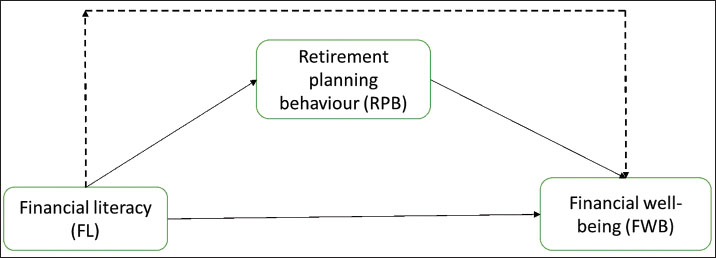
H1: Financial literacy has a positive and significant effect on financial well-being.
Financial Literacy and Retirement Planning Behaviour
The theory of life cycle hypothesis (LCH), proposed by Ando and Modigliani (1963), addresses planning for the short- and long-term future by individuals based on their income, which asserts that people endeavouring to smoothen lifetime consumption need to comprehend financial products amidst the diverse range of financial products (Deaton, 2005; Tomar et al., 2021). This calls for understanding financial terms; since studies have highlighted that for efficient financial planning, both short term and long term, and preparing for retirement, a certain level of FL is critical (Ayu Lestari et al., 2020; Lusardi & Mitchell, 2011; Safari et al., 2021), hence, as supported by prior studies, the LCH theory has been considered as the underlying theory to understand the criticality of FL to create efficient RPB in employees (Vivel-Búa et al., 2019).
An extensive foundational premise is that improved knowledge of various financial instruments lessens information-collecting and -processing costs and the psychological and fiscal angst associated with engaging in financial markets and preparing for retirement. Consequently, increased FL hastens the development of retirement plans and the implementation of financial decisions (van Rooij et al., 2012). Preceding studies reconnoitring the link between FL and designing retirement plans (Dvorak & Hanley, 2010) have revealed that people and young adults with moderate income and education have high levels of retirement anxiety (Hayslip et al., 1997) due to a dearth of information about retirement caused by a lack of knowledge of financial notions (Mitchell & Moore, 1998).
H2: Financial literacy has a significant and positive effect on retirement planning behaviour.
Retirement Planning Behaviour and Financial Well-being
Retirement planning, identified as ‘a goal-oriented attitude in which individuals spend the effort to prepare for their retirement life’ (Yeung & Zhou, 2017), has the ability to alleviate retirement concerns, control stress and strengthen retirement readiness and morale. To attain this preparedness for eventual security in later years, acquiring insights into FL is intrinsic, as this gives way to FWB. FWB is one of the most formidable matters of contention in societal financial management. Simply put, it can be comprehended as reaping financial security and the economic independence to make prudent financial decisions now and in the future (CFPB, 2015).
Prior studies reveal that low levels of financial literacy lead to deficit planning behaviour, thereby percolating into dissatisfaction in FWB issues, since there exists a high correlation between FL and FWB in retirement as those who strategize for the future and establish long-term aspirations reflect better FWB (Hung et al., 2009; Lusardi & Mitchell, 2008; Xiao & O’Neill, 2018). This has been supported by similar findings in North Carolina (Clark et al., 2021) and Ghana (Adam et al., 2017), which have proposed that by actively planning for retirement, employees can experience greater financial stability and a higher quality of life both during their working years and throughout their retirement (She et al., 2023).
H3: Retirement planning behaviour of employees has a positive and significant impact on their financial well-being.
The Mediating Role of Retirement Planning Behaviour
Pahlevan Sharif et al. (2020) have highlighted that FL promotes the efficient management of financial resources, which boosts FWB, implying that the capacity to handle monetary resources may intervene in the direct relationship between FL and FWB. Further, it has been discovered that individuals possessing high levels of FL and a proclivity to set long-term financial objectives exhibit a strengthened positive relationship between their financial knowledge and FWB (Lee et al., 2020).
Financial behaviour specifying money management capabilities and strategies (Sabri & Falahati, 2012) pertains to how an individual can handle financial and income situations (Saurabh & Nandan, 2018). Financial behaviour has been illustrated to be a vital aspect of FWB in earlier studies, with individuals who exhibit positive financial behaviour, such as financial planning, avoiding risky financial decisions, regulating their expenses and abstaining from or indulging in compulsive buying, being far more inclined to be financially secure (Chavali et al., 2021; Joo & Grable, 2004; Shim et al., 2009). On the contrary, prior research has consistently identified challenges among young working adults in effectively managing finances and strategically planning expenditures to meet both immediate and long-term financial obligations, as well as fulfilling their needs and desires (Sabri et al., 2022). This hampers their sense of well-being, thus exhibiting the need to address the importance of RPB to enhance their FWB.
Even though abundant literature has demonstrated the direct positive effect of financial behaviour on FWB and its intervention effect on the FL-FWB association (Fan & Henager, 2022; Gutter & Copur, 2011; Sabri et al., 2022; She et al., 2022; Xiao et al., 2014). The mediating effect of retirement planning behaviour (RPB) which reflects the future-oriented dimension of financial behaviour through which individuals utilize their financial knowledge and skills to improve their financial well-being (FWB) has not been studied. Despite extensive evidence on financial behaviour as a mediator, limited research has specifically examined RPB as a distinct mediating mechanism, particularly in emerging economies such as India.
Therefore, drawing from the TPB; Ajzen, 1991) and the future perspective theory (Percy & Elizabeth, 2011) coupled with available existing literature support, it can be established that increased FL among employees enhances their understanding of the significance of retirement planning and the diverse strategies at their disposal, thereby increasing the likelihood of their active engagement in RPB (Fan et al., 2022; Tomar et al., 2021), such as saving for retirement and making informed investment decisions, which in turn lead to financial security, reduced financial stress and a synergized effect to bring about better overall sense of well-being. In this context, our study attempts to investigate the vital mediating effect of RPB in finding a link between FL and FWB, which serves as a catalyst in leveraging employees’ financial knowledge and skills to enhance their overall FWB.
Thus, we formulate the following hypothesis:
H4: Retirement planning mediates the relationship between financial literacy and financial well-being.
Hypothesized Model
Figure 1 highlights the conceptual framework of the study based on the above literature, where each of the hypotheses, H1 to H4, is clearly outlined in the model.
Research Methodology
Research Design
For the purpose of this study, a cross-sectional and quantitative approach was adopted to explore the association among FL, FWB and RPB and the mediating role of RPB in the intertwining relationship between FL and FWB.
The target respondents of the study were working professionals employed in the top five Indian IT sectors based in Kolkata, the state capital of West Bengal, India, for empirical validation. Kolkata has been selected as a sample space for the study because of the following reasons: first, the city’s diaspora has spurred it to foster creativity connected with technology, making it an important rising centre for IT outsourcing in eastern India (Tiwari, 2023). Second, being one of the least-paid cities in the IT industry, with a yearly average estimated at $3,600-$4,500, there has been a recent spurt of IT companies in this metro city, employing more than 150,000 employees (Irascu, 2023); thus, a generalization can be drawn.
Survey Instruments
General Information Schedule
Data were collected concerning certain demographic variables such as gender, age, educational qualification, employment category and annual income level of the respondents.
Financial Literacy Scale
FL has been taken up as the exogenous variable for our study, and the five-item scale is adapted from the prior studies by Atkinson and Messy (2012) and OECD (2017, pp. 1-80). One example of a sample item is ‘I generally prefer to buy a wide range of stock and shares to diversify my risk of investing in the stock market’. The statements were rated on a 7-point scale, where 1 represented ‘strongly disagree’ while 7 denoted ‘strongly agree.’
Financial Well-being Scale
FWB has been taken as the dependent variable for this study, which has been assessed by using an adapted version of a 9-item scale constructed by Kamaluddin et al. (2018), Mokhtar et al. (2015) and Prawitz et al. (2006). One example of a sample item is ‘Your satisfaction level towards your overall financial situation’. The statements were rated on a 7-point scale from ‘strongly agree’ to ‘strongly disagree’.
Retirement Planning Behaviour Scale
The independent variable RPB has been measured by using the 5-item scale adapted from Hassan et al. (2016). One sample item of the scale is ‘I am confident about having enough money to live comfortably in retirement years’. The statements were rated on a 7-point scale from ‘strongly agree’ to ‘strongly disagree’.
Sampling and Data Collection
A self-administered questionnaire was constructed and a convenience sampling technique was adopted for collecting data (Sedgwick, 2013; Stratton, 2021). The minimum age criterion for the participants was 18 years. Additionally, participants were informed that their participation in the survey was completely optional and that their answers would be used solely for research purposes.
Initially, we distributed 400 questionnaires and followed up with e-mails and personal calls to encourage responses over a 3-month period. The data collection process extended to almost three and a half months, resulting in 370 responses. After carefully reviewing and excluding irrelevant or incomplete information, we retained 352 data sets for further analysis.
Raykov and Marcoulides (2006) suggest that ‘the sample size should be at least ten times greater than the number of free parameters in the proposed model’. In our study, to ensure the adequacy of our sample size, we employed 19 variables, implying that 270 observations would be sufficient; thereby, our sample of 352 data exceeds this requirement, highlighting data adequacy.
Common Method Bias
To mitigate the issue of common method bias, survey questions were meticulously designed to be clear and straightforward, enhancing respondents’ understanding (Podsakoff et al., 2003), and respondents were also assured of the confidentiality of their responses (Chang et al., 2010), thereby ensuring their honest responses. For further assessing this bias, Harman’s single-factor test was used, where the results explained only 37.711% of the variance, below the recommended threshold of 50%, exhibiting a poor fit for the single-factor solution (Podsakoff et al., 2003). To further validate the absence of common method bias, the variance inflation factor (VIF) was calculated. Notably, the VIFs for all the study variables (ranging from 1.365 to 2.349) were well below the suggested cut-off of 3.3, as outlined by Kock (2015).
Data Analysis Results
Descriptive statistics assessed the respondents’ socio-demographic data, and then PLS-SEM was employed to assess the quantitative data. A two-step approach was followed with confirmatory factor analysis (CFA) to assess the measurement model, and then the structural model was examined using a bias-corrected bootstrapping technique, with 5,000 replications to ensure robustness in the analysis for potential biases.
PLS-SEM is an emergent information analysis technique that manages sample size and non-normal facts in business and social science research (Hair, Hult & Ringle, 2014). Further, in a direct comparison with covariance-based SEM (CB-SEM) Hair, Hult & Ringle (2014) found that if the prediction is the goal of the research, PLS-SEM is the preferred alternative. The analysis was conducted in two stages, with the measurement model examined initially, followed by the structural model (Henseler et al., 2015).
Respondents’ Profiling
A total of 54.6% males and 45.4% females participated in the survey. A majority of employees (42.6%) were within the age range of 26-33 years, followed by less than 41 years and more than 34 years, with 22.7% representation in the sample. The rest were as follows: 14.8%, 13.1% and 6.8% constituted the age range 18-25 years, 42-50 years and 51 years and above, respectively.
Educational levels showed that 61.1% were post-graduates, 28.1% were graduates, 5.7% were under-graduates and 5.1% had other qualifications. Income levels of the employees were divided into four categories as depicted in Table 1.
| Characteristics | Frequency (n) | Percentage (%) |
| Gender | ||
| Male | 192 | 54.6 |
| Female | 160 | 45.4 |
| Age level | ||
| 18–25 years | 52 | 14.8 |
| 26–33 years | 150 | 42.6 |
| 3441 years | 80 | 22.7 |
| 42–50 years | 46 | 13.1 |
| 51 years & above | 24 | 6.8 |
| Educational level | ||
| Under-graduates | 20 | 5.7 |
| Graduates | 99 | 28.1 |
| Post-graduates | 215 | 61.1 |
| Other qualification | 18 | 5.1 |
| Income level | ||
| Less than 3 lakhs | 40 | 11.4 |
| 3–6 lakhs | 112 | 31.8 |
| 6–10 lakhs | 144 | 40.9 |
| 10 lakhs & above | 56 | 15.9 |
Measurement Model Assessment
In PLS-SEM analysis, the measurement model analysis is the initial step to ensure reliability and validity of the data.
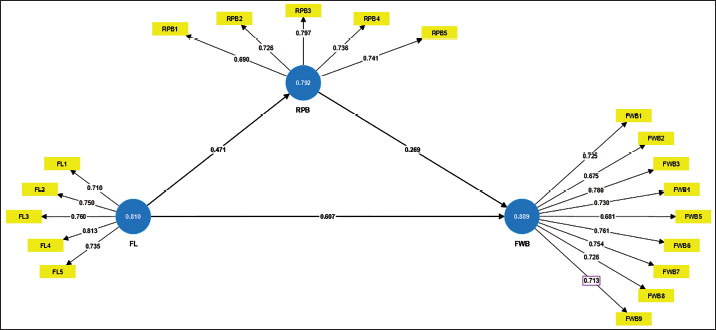
The results of CFA exhibited an SRMR value of 0.07, which is below the threshold limit of 0.08, suggesting the fitness of the measurement model (Henseler et al., 2015). Further, the item factor loadings were found to be well above 0.50, which seemed adequate for our study (see Table 2; Hair et al., 2020).
| Items | Loadings | α | CR | AVE | VIF |
| Financial Literacy (FL) | 0.81 | 0.868 | 0.569 | ||
| FL1 | 0.71 | 1.398 | |||
| FL2 | 0.75 | 1.719 | |||
| FL3 | 0.76 | 1.626 | |||
| FL4 | 0.813 | 1.955 | |||
| FL5 | 0.735 | 1.571 | |||
| Financial Well-being (FWB) | 0.889 | 0.91 | 0.53 | ||
| FWB1 | 0.725 | 1.945 | |||
| FWB2 | 0.675 | 1.646 | |||
| FWB3 | 0.78 | 2.349 | |||
| FWB4 | 0.73 | 2.12 | |||
| FWB5 | 0.681 | 1.771 | |||
| FWB6 | 0.761 | 2.14 | |||
| FWB7 | 0.754 | 1.829 | |||
| FWB8 | 0.726 | 1.722 | |||
| FWB9 | 0.713 | 1.72 | |||
| Retirement Planning Behaviour (RPB) | 0.792 | 0.857 | 0.546 | ||
| RPB1 | 0.69 | 1.365 | |||
| RPB2 | 0.726 | 1.581 | |||
| RPB3 | 0.797 | 1.596 | |||
| RPB4 | 0.736 | 1.636 | |||
| RPB5 | 0.741 | 1.552 |
All the constructs exhibited Cronbach’s α ranging from 0.792 to 0.889, thereby demonstrating the values to be satisfying the criterion of threshold level of 0.70 (Nunnally, 1978). To further confirm the reliability of the measures, the values of CR for all the constructs ranged from 0.857 to 0.91, showing strong internal consistency and construct reliability (Hair et al., 2020). The values of AVE of each construct range from 0.53 to 0.569, indicating that the latent variable effectively accounts for more than half of the variance found in its associated indicators, thus establishing the convergent validity of the construct (Hair, Sarstedt, et al., 2014).
For discriminant validity, two measures have been put forward—the HTMT ratio and the Fornell-Larcker criterion (Henseler et al., 2015).
‘HTMT threshold levels suggest the values to be less than or equal to 0.90’ (Henseler et al., 2015; Mitra & De, 2024), as highlighted by the results, thus establishing the existence of discriminant validity (Jha et al., 2023). The results of the discriminant validity test utilizing Fornell and Larcker’s (1981) measure are also shown in Table 3.
| Variables | FL | FWB | RPB |
| HTMT Correlation Test Result | |||
| FL | |||
| FWB | 0.851 | ||
| RPB | 0.577 | 0.647 | |
| Fornell–Larcker Criterion | |||
| FL | 0.754 | ||
| FWB | 0.734 | 0.728 | |
| RPB | 0.471 | 0.555 | 0.739 |
Structural Model Analysis
Following the satisfactory assessment of the measurement model, the next phase in evaluating PLS-SEM results was scrutinizing the structural model. The assessment criteria of structural model include the coefficient of determination (R2), addressing the multi-collinearity issue (VIF) and hypothesis testing through path coefficient significance level (Hair et al., 2013). Additionally, the model’s ability to make predictions beyond the data set using the PLS predict procedure has also been evaluated (Shmueli et al., 2019).
To assess multicollinearity, VIF was examined, where the values ranged from 1.365 to 2.349, thus showing all the values below the suggested threshold level (Hair et al., 2019). Therefore, multi-collinearity was not a concern in this study.
The coefficient of determination, R2, was estimated, highlighting that the model explains 59.5% of the variance in RPB and 22.2% variance in employees’ FWB, thereby indicating moderate in-sample explanatory power of our model (Hair et al., 2011). For the predictive accuracy of the PLS path, the Stone-Geisser’s Q2 is calculated as 0.202 for RPB and 0.577 for FWB, suggesting a moderate and strong predictive relevance for the path model (Hair et al., 2019).
Next, to evaluate the statistical significance of the hypothesized relationship, the bootstrapping procedure was adopted with 5,000 bootstrap samples, no sign changes option and 95% bias-corrected confidence interval.
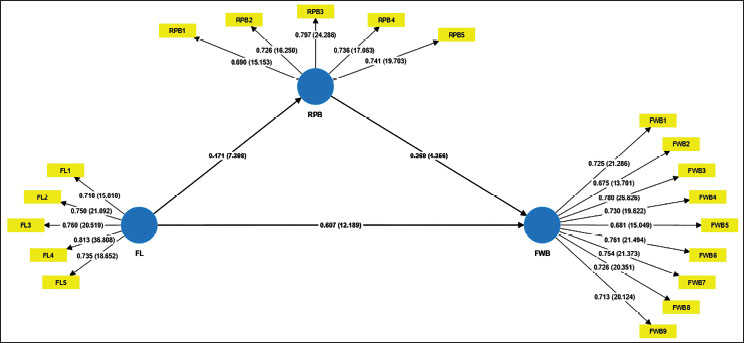
The results of the path coefficient analysis highlight that all the path coefficients have significant and positive impacts, thereby supporting all the proposed hypotheses (see Table 4 and Figure 2).
| Hypothesis | Relationship | β Value | SD | t Value | p Value | Decision |
| H1 | FL ↓ FWB | 0.607 | 0.05 | 12.189 | .000 | Supported |
| H2 | FL ↓ RPB | 0.471 | 0.064 | 7.398 | .000 | Supported |
| H3 | RPB ↓ FWB | 0.269 | 0.062 | 4.356 | .000 | Supported |
Mediation Analysis
Furthermore, H4 postulates that RPB mediates the relationship between FL and FWB. In this regard, this intervention analysis has been assessed by investigating the indirect path between FL and FWB via RPB. Following the recommendations of Preacher and Hayes (2008), the findings show that the confidence intervals of the upper limit (95%) and the lower limit (5%) of the mediated relationship (H4) do not include zero, indicating the positive significance of the relationship and thereby supporting the hypothesis.
To examine the mediation effect, ‘the beta coefficient of independent-mediating and mediating-dependent variables is multiplied’.
The indirect path between FL and FWB through RPB was significant (β = 0.471 ´ 0.269 = 0.127, t = 3.6, p < .001, LL = 0.074, UL = 0.187), whereas the total effect (β = 0.734, t = 22.336, p < .001) along with direct effect (β = 0.607, t = 12.189, p < .001) after introducing the mediator was also significant.
Hence, the result confirms the complementary partial mediating role of RPB in association with FL and FWB. Therefore, H4 is being accepted. A detailed result of the mediation analysis has been displayed in Table 5 and Figure 3.
| Total Effects (FL ↓ FWB) | Direct Effects | Indirect Effects | |||||||||||
| Coefficient | t Value | p Value | Coefficient | t Value | p Value | Hypothesis | Coefficient | SE | t Value | p Value | Percentile Bootstrap | ||
| Lower | Upper | Decision (Mediation Type) | |||||||||||
| 0.734 | 22.336 | 0.000 | 0.607 | 12.189 | .000 | H4: FL ↓ RPB ↓ FWB | 0.127 | 0.035 | 3.6 | .000 | 0.074 | 0.187 | Partial |
Discussion and Implications
Major Findings
Our study is one of the primary empirical studies that has attempted to scrutinize the FL and FWB relationship in the context of Indian IT sector employees using RPB as a mediator. Promoting employees’ FWB and making them aware of the benefits of planning ahead for retirement is important because of its far-reaching impact on a country’s economy. Additionally, the FWB aspect of employees has been scarcely discussed in the context of Indian working professionals.
The current study verifies the paradigm of FL and FWB to explain employee status in terms of RPB. The findings of the study provide evidence for positive and significant impacts of all the proposed hypotheses of the model. The study makes several significant theoretical contributions by introducing novel concepts, advancing existing frameworks and enhancing our understanding of the subject matter.
The results of this research demonstrate that FL has a substantial impact on FWB of employees (H1; β = 0.607, t = 12.189, p < .001), aligning with the results of prior studies by Grable and Lytton (1998) and Narges and Laily (2011). In the Indian IT sector, where tumultuous cut-throat competition exists, employees face burnout in balancing the management of their financial resources along with the tremendous work pressures that have a cascading impact on their level of FWB. Therefore, understanding the criticalities of financial horizons would act as an anchor for the working population to keep the financial constraints at bay and attain holistic FWB.
As for H2, the results propound that FL has a positive and significant impact on the RPB of employees (β = 0.471, t = 7.398, p < .001). The LCH supports the idea of the criticality of FL for RPB, forming the basis of our findings (Case & Klapper, 2011; Safari et al., 2021). Existing literature studies have revealed that financial knowledge and acquired abilities have a positive relationship with their planning behaviour regarding their pre- and post-retirement phases (Bucher-koenen & Lusardi, 2011; van Rooij et al., 2012). Our study, which has attempted to investigate this effect with regard to Indian IT sector employees, has also found similar findings of the significant relationship of FL with RPB. Employees who are miscalibrated about their FL make suboptimal financial decisions, affecting their long-term planning behaviour. FL empowers employees by equipping them with the knowledge and understanding of retirement planning concepts, facilitating informed decision-making, realistic goal setting, active savings and appropriate investments. Additionally, it enables employees to evaluate risks and implement risk management strategies, leading to enhanced RPB and better preparation for unforeseen circumstances.
Based on TPB (Ajzen, 1991) and the future time perspective theory (Percy & Elizabeth, 2011), the findings of H3 revealed significant results of the impact of RPB on employees’ FWB (β = 0.269, t = 4.356, p < .001). Our research findings align with the earlier results of Kadir et al. (2020) and Noone et al. (2009). Involvement by the employees in early planning for post-retirement phases would not only help in alleviating their financial stress but also benefit in smoothening their financial security in later years. Concisely, engaging in retirement planning is crucial for employees’ FWB, offering benefits such as security through saving and investing, goal achievement, preparedness for retirement, improved decision-making skills and reduced financial stress, leading to enhanced overall well-being.
Finally, in H4, RPB was assessed as an intervening construct in the FL-FWB association. The path analysis results demonstrated a complementary partial mediation effect of employees’ RPB, which conforms with prior studies showing an association between FL and RPB (Boisclair et al., 2015; Niu & Zhou, 2018) and RPB and FWB (Kadir et al., 2020; Xiao & O’Neill, 2018), thereby highlighting that FL equips employees with knowledge and skills, enabling them to engage in effective RPB, thus enhancing their FWB, resulting in a positive relationship between FL and overall FWB.
Managerial Implications
The empirical results suggest that organizations need to transition from their conventional role to intervene and support their employees regarding their financial concerns and long-term security. For IT services, this is the most sought-after. Employers must include FWB as a key part of the overall workforce well-being strategy. They may bring on site third-party vendor support as financial counsellors and educators who can identify at-risk employees and provide customized retirement incentives by understanding their financial priorities. Organizations can also set up in-house financial counselling centres to help employees identify the need for FL to plan for their retirement and its cascading consequences on their post-retirement well-being. Overall, recognizing and leveraging the mediating effect of RPB can lead organizations to promote FL, provide retirement benefits and support, prioritize employee FWB and enhance retirement readiness. These efforts contribute to a more engaged and financially secure workforce, ultimately benefiting both employees and the organization as a whole.
Policy Implications
At the national level, financial educators and practitioners who can strategize and administer targeted staff training programmes may be designated. This will correspond with the various stages of their life cycles, skill levels and information needs, reinforcing the necessity of FL. Furthermore, a comprehensive long-term financial security scheme would be designed to consider both objective and subjective markers of FL and their well-being to more effectively assess the programmes’ true effects on the targeted audiences. The findings of the partial mediating impact of RPB provide implications for the government, where future planning pro-environment can be created via incentives targeted towards specific income groups or populations with lower levels of FL. This will establish regulations and standards for financial advisors to ensure they provide accurate and unbiased retirement planning advice, provide incentives or create regulations that encourage employers to prioritize employee FWB through retirement planning support and provide safety nets for individuals who may face challenges in retirement planning despite their efforts, such as accessible pension schemes, government-funded retirement benefits and social assistance programmes. These policies would aid in building a holistic and self-subsistence formal financial economy.
Conclusion and Limitations
Owing to the paradigm shift of understanding employees’ well-being in monetary terms to its increasing criticality for the survival and development of organizations around the world (Spreitzer Gretchen & Christine, 2012), employers and organizations have started ensuring that employees possess a sense of security and confidence for their current and future well-being. For this, it is necessary for them to be robust in their financial concepts. This research strives to scrutinize the behavioural effect of FL on FWB via the mediating effect of RPB. Empirically tested hypotheses confirmed the positive and significant associations between the variables, showing the relevance of FWB among employees.
Limitations and Scope for Future Research
Even with the study’s significant contributions, it is crucial to acknowledge its limitations. The scope of the study is limited to the Indian IT sector based in Kolkata. Future research can explore other service industries, such as banking, healthcare and educational institutions. Second, the data were obtained through a Web-based survey utilizing non-probability sampling that was not stratified by nation or organization size, increasing the likelihood of impacting data quality. Finally, longitudinal studies can be a better approach in future studies that may determine the time-based interactions of the study variables.
Further, studies related to other scopes of finance affecting an individual, such as financial resilience, financial self-efficacy, financial vulnerability, financial capability and financial socialization agents, can be explored as mediators and moderators for better model conceptualization.
The authors declared no potential conflicts of interest with respect to the research, authorship and/or publication of this article.
The authors received no financial support for the research, authorship and/or publication of this article.
Aishwarya Mitra https://orcid.org/0000-0002-4414-3359
Adam A. M., Frimpong S., & Opoku Boadu M. (2017). Financial literacy and financial planning: Implication for financial well–being of retirees. Business and Economic Horizons, 13(2), 224–236. https://doi.org/10.15208/beh.2017.17
Agnew J., Bateman H., & Thorp S. (2013). Financial literacy and retirement planning in Australia. Numeracy, 6(2), 335–362. https://doi.org/10.5038/1936–4660.6.2.7
Ajzen I. (1991). The theory of planned behavior. Organizational Behavior and Human Decision Processes, 50(2), 179–211. https://doi.org/10.1016/0749–5978(91)90020–T
Almenberg J., Säve–söderbergh J., & Almenberg J. (2011). Financial literacy and retirement planning in Sweden. Journal of Pension Economics and Finance, 10(4), 585–598. https://doi.org/10.1017/S1474747211000497
Ando A., & Modigliani F. (1963). The ‘life cycle’ hypothesis of saving : Aggregate implications and tests. The American Economic Review, 53(1), 55–84.
Andriessen I., Phalet K., & Lens W. (2006). Future goal setting, task motivation and learning of minority and non–minority students in Dutch schools. British Journal of Educational Psychology, 76(4), 827–850. https://doi.org/10.1348/000709906X148150
Atkinson A., & Messy F.–A. (2012). Measuring financial literacy: Results of the OECD/International Network on Financial Education (INFE) pilot study (OECD Working Papers on Finance, Insurance and Private Pensions, No. 15). OECD Publishing. https://doi.org/10.1787/5k9csfs90fr4–en
Ayu Lestari W., Banani A., & Dhani Laksana R. (2020). Financial literacy and retirement preparation. Journal of Economics, Business, and Accountancy Ventura, 14(2), 122–128.
Behrman J. R., Mitchell O. S., Soo C., & Bravo D. (2010). Financial literacy, schooling, and wealth accumulation. SSRN Electronic Journal, 60. https://doi.org/10.2139/ssrn.1688985
Boisclair D., Lusardi A., & Pierre–Carl M. (2015). Financial literacy and retirement planning in Canada. Journal of Pension Economics and Finance. https://doi.org/10.1017/S1474747215000311
Brüggen E. C., Hogreve J., Holmlund M., Kabadayi S., & Löfgren M. (2017). Financial well–being: A conceptualization and research agenda. Journal of Business Research, 79, 228–237. https://doi.org/10.1016/j.jbusres.2017.03.013
Bucher–koenen T., & Lusardi A. (2011). Financial literacy and retirement planning in Germany. Journal of Pension Economics and Finance, 10(4), 565–584. https://doi.org/10.1017/S1474747211000485
Case T. R., & Klapper L. (2011). Financial literacy and retirement planning: The Russian case (World Bank Working Paper Series on Entrepreneurship and Innovation). World Bank.
CFPB. (2015). Financial well being: The goal of financial education. Consumer Financial Protection Bureau. http://files.consumerfinance.gov/f/201501_cfpb_report_financial–well–being.pdf
Chang S.–J., van Witteloostuijn A., & Eden L. (2010). From the editors: Common method variance in international business research. Journal of International Business Studies, 41(2), 178–184. https://doi.org/10.1057/jibs.2009.88
Chavali K., Raj P. M., & Ahmed R. (2021). Does financial behavior influence financial well–being? Journal of Asian Finance, Economics and Business, 8(2), 273–280. https://doi.org/10.13106/jafeb.2021.vol8.no2.0273
Clark R. L., Hammond R. G., & Liu S. (2021). Work after retirement: Worklife transitions of career public employees. Journal of Pension Economics and Finance, 20(3), 341–356. https://doi.org/10.1017/S1474747219000428
Deaton A. (2005). Franco Modigliani and the life–cycle theory of consumption. BNL Quarterly Review, 58(June–September), 91–107.
Dutta P. K. (2017). India, not China, is among the fastest growing economies: World Bank. India Today. https://www.indiatoday.in/india/story/india–china–fastest–growing–economies–world–bank–1024813–2017–07–17
Dvorak T., & Hanley H. (2010). Financial literacy and the design of retirement plans. Journal of Socio–economics, 39(6), 645–652. https://doi.org/10.1016/j.socec.2010.06.013
Dzogbenuku R. K., Amoako G. K., Kumi D. K., & Bonsu G. A. (2022). Digital payments and financial wellbeing of the rural poor: The moderating role of age and gender. Journal of International Consumer Marketing, 34(2), 113–136. https://doi.org/10.1080/08961530.2021.1917468
Faezah N., Talib M., & Manaf H. A. (2017). Attitude towards retirement planning behaviour among employee’s. Journal of Business and Management, 1(1), 15–21.
Fan L., & Henager R. (2022). A structural determinants framework for financial well–being. Journal of Family and Economic Issues, 43(2), 415–428. https://doi.org/10.1007/s10834–021–09798–w
Fan L., Stebbins R., & Tae K. (2022). Skint: Retirement? Financial hardship and retirement planning behaviors. Journal of Family and Economic Issues, 43(2), 354–367. https://doi.org/10.1007/s10834–021–09779–z
Fornell C., & Larcker D. F. (1981). Evaluating structural equation models with unobservable variables and measurement error. American Marketing Association, 18(1), 39–50.
Grable J. E., & Lytton R. H. (1998). Investor risk tolerance: Testing the efficacy of demographics as differentiating and classifying factors. Journal of Financial Counseling and Planning, 9(1), 61–74.
Grohmann A. (2018). Financial literacy and financial behavior: Evidence from the emerging Asian middle class. Pacific Basin Finance Journal, 48, 129–143. https://doi.org/10.1016/j.pacfin.2018.01.007
Gutter M., & Copur Z. (2011). Financial behaviors and financial well–being of college students: Evidence from a national survey. Journal of Family and Economic Issues, 32(4), 699–714. https://doi.org/10.1007/s10834–011–9255–2
Hair J. F., Howard M. C., & Nitzl C. (2020). Assessing measurement model quality in PLS–SEM using confirmatory composite analysis. Journal of Business Research, 109, 101–110. https://doi.org/10.1016/j.jbusres.2019.11.069
Hair J. F., Hult G. T., & Ringle C. M. (2014). A primer on partial least squares structural equation modeling. Long Range Planning, 46(1–2). https://doi.org/10.1016/j.lrp.2013.01.002
Hair J. F., Ringle C. M., & Sarstedt M. (2011). PLS–SEM: Indeed a silver bullet. Journal of Marketing Theory and Practice, 19(2), 139–152. https://doi.org/10.2753/MTP1069–6679190202
Hair J. F., Risher J. J., Sarstedt M., & Ringle C. M. (2019). When to use and how to report the results of PLS–SEM. European Business Review, 31(1), 2–24. https://doi.org/10.1108/EBR–11–2018–0203
Hair J. F., Ringle C. M., & Sarstedt M. (2013). Partial least squares structural equation modeling: Rigorous applications, better results and higher acceptance. Long Range Planning, 46(1–2), 1–12.
Hair J. F., Sarstedt M., Hopkins L., & Kuppelwieser V. G. (2014). Partial least squares structural equation modeling (PLS–SEM): An emerging tool in business research. European Business Review, 26(2), 106–121. https://doi.org/10.1108/EBR–10–2013–0128
Hassan Al–Tamimi H. A., & Anood Bin Kalli A. (2009). Financial literacy and investment decisions of UAE investors. Journal of Risk Finance, 10(5), 500–516. https://doi.org/10.1108/15265940911001402
Hassan K. H., Rahim R. A., Ahmad F., Tengku Zainuddin T. N. A., Merican R. R., & Bahari S. K. (2016). Retirement planning behaviour of working individuals and legal proposition for new pension system in Malaysia. Journal of Politics and Law, 9(4), 43. https://doi.org/10.5539/jpl.v9n4p43
Hayslip B., Beyerlein M., & Nichols J. A. (1997). Assessing anxiety about retirement: The case of academicians. The International Journal of Aging and Human Development, 44(1), 15–36. https://doi.org/10.2190/BY4B–HMQA–RDY1–HF5B
Henseler J., Ringle C. M., & Sarstedt M. (2015). A new criterion for assessing discriminant validity in variance–based structural equation modeling. Journal of the Academy of Marketing Science, 43(1), 115–135. https://doi.org/10.1007/s11747–014–0403–8
Hershey D., Henkens K., & Van Dalen H. (2010). Aging and financial planning for retirement: Interdisciplinary influences viewed through a cross–cultural lens. International Journal of Aging and Human Development, 70(1), 1–38. https://doi.org/10.2190/AG.70.1.a
Hung A., Parker A. M., & Yoong J. (2009). Defining and measuring financial literacy. SSRN Electronic Journal. https://doi.org/10.2139/ssrn.1498674
Irascu D. (2023). ICT in the United States: General profile and insights.
Jha I. N., Pal D., & Sarkar S. (2023). Embracing diversity and igniting excellence: Unveiling the impact of workplace inclusion on organizational outcomes in the Indian IT sector. Journal of Human Behavior in the Social Environment, 1–18. https://doi.org/10.1080/10911359.2023.2289481
Jha I. N., Pal D., & Sarkar S. (2024). Thriving in diversity: The role of inclusive leadership and workplace inclusion in enhancing satisfaction with life among Indian IT employees. Journal of Management Development, 43(5), 663–689. https://doi.org/10.1108/JMD–09–2023–0269
Joo S., & Grable J. E. (2004). An exploratory framework of the determinants of financial satisfaction. Journal of Family and Economic Issues, 25(1), 25–50. https://doi.org/10.1023/B:JEEI.0000016722.37994.9f
Kadir J. M. A., Zainon S., Ismail R. F., Aziz S. N. A., & Amran A. A. I. (2020). Retirement planning and its impact on working individuals. European Journal of Molecular and Clinical Medicine, 7(6), 1550–1559.
Kamaluddin M., Nasir R., Wan S., Rozainee K., & Ahmad Z. Z. (2018). Validity and reliability of Malay version of financial well–being scale among Malaysian employees. Akademika, 88(2), 109–120.
Kaur G., Singh M., & Gupta S. (2022). Analysis of key factors influencing individual financial well–being using ISM and MICMAC approach. Quality & Quantity. https://doi.org/10.1007/s11135–022–01422–9
Kerry M. J. (2018, October). Psychological antecedents of retirement planning: A systematic review. Frontiers in Psychology, 9. https://doi.org/10.3389/fpsyg.2018.01870
Kimiyagahlam F., Safari M., & Mansori S. (2019). Influential behavioral factors on retirement planning behavior: The case of Malaysia. Journal of Financial Counseling and Planning, 30(2), 244–261. https://doi.org/10.1891/1052–3073.30.2.244
Kock N. (2015). Common method bias in PLS–SEM: A full collinearity assessment approach. International Journal of E–collaboration, 11(4), 1–10. https://doi.org/10.4018/ijec.2015100101
Lee J. M., Lee J., & Kim K. T. (2020). Consumer financial well–being: Knowledge is not enough. Journal of Family and Economic Issues, 41(2), 218–228. https://doi.org/10.1007/s10834–019–09649–9
Limbu Y. B., & Sato S. (2019). Credit card literacy and financial well–being of college students. International Journal of Bank Marketing, 37(4), 991–1003. https://doi.org/10.1108/IJBM–04–2018–0082
Lusardi A. (2019). Financial literacy and the need for financial education: Evidence and implications. Swiss Journal of Economics and Statistics, 155(1), 1–8. https://doi.org/10.1186/s41937–019–0027–5
Lusardi A., & Mitchell O. S. (2007). Financial literacy and retirement planning: New evidence from the RAND American life panel. SSRN Electronic Journal. https://doi.org/10.2139/ssrn.1095869
Lusardi A., & Mitchell O. S. (2008). Planning and financial literacy: How do women fare? American Economic Review, 98(2), 413–417. https://doi.org/10.1257/aer.98.2.413
Lusardi A., & Mitchell O. S. (2011). Financial literacy and retirement planning in the United States. Journal of Pension Economics and Finance, 10(4), 509–525. https://doi.org/10.1017/S147474721100045X
Mahdzan N. S., Zainudin R., Abd Sukor M. E., Zainir F., & Wan Ahmad W. M. (2020). An exploratory study of financial well–being among Malaysian households. Journal of Asian Business and Economic Studies, 27(3), 285–302. https://doi.org/10.1108/JABES–12–2019–0120
Mandal V., & Pal D. (2024). Going green from within: The mediation of employee green creativity in the relationship between green inclusive leadership and green organizational citizenship behaviour. Global Business Review. https://doi.org/10.1177/09721509241264132
Mitchell O. S., & Moore J. F. (1998). Can Americans afford to retire? New evidence on retirement saving adequacy. The Journal of Risk and Insurance, 65(3), 371–400. https://doi.org/http://www.jstor.org/stable/253656
Mitra A., & De A. (2024). Financial literacy and its impact on life satisfaction in rural households: A mediated approach via financial self–efficacy. Journal of Indian Business Research, 16(3), 353–374. https://doi.org/10.1108/JIBR–05–2023–0134
Mitra A., & De A. (2025). Enhancing life satisfaction through financial literacy and behavior: Insights from the Indian IT sector. Journal of Workplace Behavioral Health, 40(2), 213–250. https://doi.org/10.1080/15555240.2024.2406494
Mokhtar N., Sabri M. F., & Talib M. A. (2015). Financial well–being among public employees in Malaysia : A preliminary financial well–being among public employees in Malaysia—A preliminary study. Asian Social Science. https://doi.org/10.5539/ass.v11n18p49
Murari K., & Shukla S. (2021). Do psychological social and financial perceptions of post–retirement life and demography influence the retirement planning behaviour? International Journal of Social Economics, 48(11), 1545–1566. https://doi.org/10.1108/IJSE–08–2020–0581
Mustafa A., Dept C., Abdul S., Shah A., Usahawan P., Yusof K., Silim A., Adiman R., Laila N., & Politeknik H. (2017). Factors influencing retirement planning behaviour of lecturers in polytechnics. Advanced Journal of Technical and Vocational Education, 1(4), 9–13. https://doi.org/10.26666/rmp.ajtve.2017.4.3
Narges D., & Laily H. P. (2011). Determinants of financial wellness among Malaysia workers. African Journal of Business Management, 5(24), 10092–10100. https://doi.org/10.5897/ajbm10.1267
Neha P., Gangadhara S., & Rao R. (2022). Analysis of determinants of financial literacy levels among IT sector employees of Visakhapatnam district, Andhra Pradesh, India. International Journal of Early Childhood Special Education (INT–JECSE), 12, 12909–12915.
Niu G., & Zhou Y. (2018). Financial literacy and retirement planning: Evidence from China. Applied Economics Letters, 25(9), 619–623. https://doi.org/10.1080/13504851.2017.1352072
Noone J. H., Stephens C., Alpass F. M., Noone J. H., & Alpass F. M. (2009). Preretirement planning and well–being in later life: A prospective study. Research on Aging, 31(3), 295–317. https://doi.org/10.1177/0164027508330718
Nunnally J. C. (1978). Psychometric theory. McGraw–Hill.
OECD. (2017). G20/OECD INFE core competencies framework on financial literacy for adults: Report on adult financial literacy in G20 countries. OECD International Network on Financial Education. https://www.oecd.org/content/dam/oecd/en/publications/reports/2017/07/g20–oecd–infe–report–on–adult–financial–literacy–in–g20–countries_021d12ec/04fb6571–en.pdf
Pahlevan Sharif S., Naghavi N., Sharif Nia H., & Waheed H. (2020). Financial literacy and quality of life of consumers faced with cancer: A moderated mediation approach. International Journal of Bank Marketing, 38(5), 1009–1031. https://doi.org/10.1108/IJBM–10–2019–0355
Percy A., & Elizabeth A.–H. (2011). Influence of future time perspective, financial knowledge, and financial risk tolerance on retirement saving behaviors. Financial Services Review, 11(17339), 105–116. https://www.researchgate.net/publication/228634854%0Ahttp://cadmus.eui.eu/bitstream/handle/1814/9811/ECO_2008_31.pdf?sequence=1%0Ahttp://scholar.google.com/scholar?hl=en&btnG=Search&q=intitle:Influence+of+future+time+perspective,+financial+knowledge,+and+
Philippas N. D., & Avdoulas C. (2020a). Financial literacy and financial well–being among generation–Z university students: Evidence from Greece. European Journal of Finance, 26(4–5), 360–381. https://doi.org/10.1080/1351847X.2019.1701512
Philippas N. D., & Avdoulas C. (2020b). Financial literacy and financial well–being among generation–Z university students: Evidence from Greece. The European Journal of Finance, 26(4–5), 360–381. https://doi.org/10.1080/1351847X.2019.1701512
Podsakoff P. M., MacKenzie S. B., Lee J. Y., & Podsakoff N. P. (2003). Common method biases in behavioral research: A critical review of the literature and recommended remedies. Journal of Applied Psychology, 88(5), 879–903. https://doi.org/10.1037/0021–9010.88.5.879
Prawitz A. D., Garman E. T., Sorhaindo B., O’Neill B., Kim J., & Drentea P. (2006). Incharge financial distress/financial well–being scale: Development, administration, and score interpretation. Journal of Financial Counseling and Planning, 17(1), 34–50.
Preacher K. J., & Hayes A. F. (2008). Asymptotic and resampling strategies for assessing and comparing indirect effects in multiple mediator models. Behavior Research Methods, 40(3), 879–891. https://doi.org/10.3758/BRM.40.3.879
President’s Advisory Council on Financial Literacy. (2008). Annual report to the President. The Department of the Treasury. www.ustreas.gov/offices/domesticfinance/%5Cnfinancialinstitution/fin–education/council/exec_sum.pdf
Raykov T., & Marcoulides G. (2006). A first course in structural equation modeling. Lawrence Erlbaum Associates.
Sabri M. F., & Falahati L. (2012). Estimating a model of subjective financial well–being among college students. International Journal of Humanities and Social Science, 2(18), 191–199. https://pdfs.semanticscholar.org/63f0/a9c2861cebeb57bf9847fe6a2169885b2718.pdf
Sabri M. F., Wahab R., Mahdzan N. S., Magli A. S., & Rahim H. A. (2022, May). Mediating effect of financial behaviour on the relationship between perceived financial wellbeing and its factors among low–income young adults in Malaysia. Frontiers in Psychology, 13. https://doi.org/10.3389/fpsyg.2022.858630
Safari K., Njoka C., & Munkwa M. G. (2021). Financial literacy and personal retirement planning: A socioeconomic approach. Journal of Business and Socio–economic Development, 1(2), 121–134. https://doi.org/10.1108/JBSED–04–2021–0052
Saurabh K., & Nandan T. (2018). Role of financial risk attitude and financial behavior as mediators in financial satisfaction: Empirical evidence from India. South Asian Journal of Business Studies, 7(2), 207–224. https://doi.org/10.1108/SAJBS–07–2017–0088
Sedgwick P. (2013, October). Convenience sampling. British Medical Journal, 347, f6304. https://doi.org/10.1136/bmj.f6304
She L., Rasiah R., Turner J. J., Guptan V., & Sharif Nia H. (2022). Psychological beliefs and financial well–being among working adults: The mediating role of financial behaviour. International Journal of Social Economics, 49(2), 190–209. https://doi.org/10.1108/IJSE–07–2021–0389
She L., Rasiah R., Weissmann M. A., & Kaur H. (2023). Using the theory of planned behaviour to explore predictors of financial behaviour among working adults in Malaysia. FIIB Business Review. https://doi.org/10.1177/23197145231169336
Shen C. H., Lin S. J., Tang D. P., & Hsiao Y. J. (2016, November). The relationship between financial disputes and financial literacy. Pacific Basin Finance Journal, 36, 46–65. https://doi.org/10.1016/j.pacfin.2015.11.002
Shim S., Xiao J. J., Barber B. L., & Lyons A. C. (2009). Pathways to life success: A conceptual model of financial well–being for young adults. Journal of Applied Developmental Psychology, 30(6), 708–723. https://doi.org/10.1016/j.appdev.2009.02.003
Shmueli G., Sarstedt M., Hair J. F., Cheah J. H., Ting H., Vaithilingam S., & Ringle C. M. (2019). Predictive model assessment in PLS–SEM: guidelines for using PLSpredict. European Journal of Marketing, 53(11), 2322–2347.
Spreitzer Gretchen, & Christine P. (2012, February). Creating sustainable performance. Harvard Business Review. https://hbr.org/2012/01/creating–sustainable–performance
Stratton S. J. (2021). Population research: Convenience sampling strategies. Prehospital and Disaster Medicine, 36(4), 373–374. https://doi.org/10.1017/S1049023X21000649
Subikshaa P., & Shoba Jasmin K. S. (2018). Stress faced by employees in information technology sector in India. International Journal of Pure and Applied Mathematics, 119(17), 201–206.
Taft M. K., Hosein Z. Z., & Mehrizi S. M. T. (2013). The relation between financial literacy, financial wellbeing and financial concerns. International Journal of Business and Management, 8(11), 63–75. https://doi.org/10.5539/ijbm.v8n11p63
Tahir M. S., Ahmed A. D., & Richards D. W. (2021). Financial literacy and financial well–being of Australian consumers: A moderated mediation model of impulsivity and financial capability. International Journal of Bank Marketing, 39(7), 1377–1394. https://doi.org/10.1108/IJBM–09–2020–0490
Taylor M. A., & Doverspike D. (2003). Retirement planning and preparation. In Feldman M. S. & Beehr G. R. (Eds.), Retirement: Reasons, processes, and results (pp. 53–82). Springer Publishing Company.
Tiwari D. (2023). Growth of IT industry in Kolkata. Edureify Blog. https://timesofindia.indiatimes.com/city/kolkata/tech–it–global–kolkatas–it–sector–booms–with–70–annual–growth/articleshow/115632262.cms
Tomar S., Kent Baker H., Kumar S., & Hoffmann A. O. I. (2021, November). Psychological determinants of retirement financial planning behavior. Journal of Business Research, 133, 432–449. https://doi.org/10.1016/j.jbusres.2021.05.007
Van Rooij M. C. J., Lusardi A., & Alessie R. J. M. (2011). Financial literacy and retirement planning in the Netherlands. Journal of Economic Psychology, 32(4), 593–608. https://doi.org/10.1016/j.joep.2011.02.004
van Rooij M. C. J., Lusardi A., & Alessie R. J. M. (2012). Financial literacy, retirement planning and household wealth. Economic Journal, 122(560), 449–478. https://doi.org/10.1111/j.1468–0297.2012.02501.x
Vinmalar J. (2018). A study on retirement planning of working individuals with special reference to Chennai city. International Journal of Management Research and Reviews, 10(9), 18–24.
Vivel–Búa M., Rey–Ares L., Lado–Sestayo R., & Fernández–López S. (2019). Financial planning for retirement: The role of income. International Journal of Bank Marketing, 37(6), 1419–1440. https://doi.org/10.1108/IJBM–09–2018–0253
Wellfren A. C., Lajuni N., Shakinah N., Hassan B., & Bosi M. K. (2022). Retirement planning through financial literacy/knowledge: A bibliometric analysis perspective. International Journal of Academic Research in Business and Social Sciences, 12(7), 1656–1672. https://doi.org/10.6007/IJARBSS/v12–i7/13033
Xiao J. J., & O’Neill B. (2018). Propensity to plan, financial capability, and financial satisfaction. International Journal of Consumer Studies, 42(5), 501–512. https://doi.org/10.1111/ijcs.12461
Xiao J. J., Chen C., & Chen F. (2014). Consumer financial capability and financial satisfaction. Social Indicators Research, 118(1), 415–432. https://doi.org/10.1007/s11205–013–0414–8
Yeung D. Y., & Zhou X. (2017, July). Planning for retirement: Longitudinal effect on retirement resources and post–retirement well–being. Frontiers in Psychology, 8. https://doi.org/10.3389/fpsyg.2017.01300
